
Frond emission from pinnae tips in Nephrolepis cordifolia
Abstract
The emission of completely developed secondary fronds from pinnae tips is described for the first time in a fern belonging to the species Nephrolepis cordifolia. The phenotype described in the paper has so far been reported very rarely and only in other Nephrolepisspecies. The phenotype demonstrates that the development of a whole frond from the apex of a secondary leaf is possible and it can be related to an alteration in the meristematic activity of the pinna apex. The stability of the phenotype over time, the occurrence of all the developmental stages of the phenotype in the same frond and the recurring appearance of the phenomenon in plants propagated from the original individual make the germplasm described in this work a plant model suitable for investigating leaf morphological plasticity in plants.
Article Information
- Received
- Accepted
- Published
Academic Editor: Anubha Bajaj, Consultant Histopathologist, A.B. Diagnostics, Delhi, India.
Checked for plagiarism: Yes
Review by: Single-blind
Copyright © 2026 Luigi d’Aquino.
 This is an open-access article distributed under the terms of the Creative Commons Attribution License, which permits unrestricted use, distribution, and reproduction in any medium, provided the original author and source are credited.
Corresponding author: Luigi d’Aquino, ENEA (Italian National Agency for New Technologies Energy and Sustainable Economic Development). Portici Research Centre, Piazzale E. Fermi 1 80055 Portici, Italy —
Competing Interests
The authors have declared that no competing interests exist.
Funding
No specific funding statement was provided by the authors.
Data Availability
No data-availability statement was provided by the authors.
Citation:
Introduction
A fern from a garden cultivation whose botanical characteristics refer to Nephrolepis cordifolia (L.) C. Presl (Cl. Polypodiopsida, Ord. Polypodiales, Fam. Nephrolepiadaceae)1 showing widespread leaf abnormalities was found in Campania Region (South Italy). No indications were available about environmental conditions and anthropic manipulations that may have caused the onset of the phenomenon and about the primary origin of the plant source. In the aerial part of the plant (Figure 1), the tips of most of the pinnae in the apical part of the fronds display a ‘wavy shape’ that evolves as a typical secondary frond when the tip of the mother frond unrolls and the lateral young pinnae become mature pinnae located in the middle of the mother frond itself (Figure 2, Figure 3, Figure 4). The secondary frond, i.e. the ‘pinna-derived frond’ (PdF), replicates the mother frond morphology, bearing typical secondary pinnae and crosiers. The secondary fronds reach a smaller size compared to the mother fronds they derive from, nevertheless they generate sori in the same period as the primary pinnae (Figure 5). The PdF is emitted only by the primary pinna tip (Figure 6), since emission has never been observed from the rachis as well as from secondary pinnae tips. The PdF emission is evident in most of the fronds and occurs throughout the growing period of the aerial part. No detectable abnormalities are evident in stems, runners, rhizomes and tubers. The PdF emission has so far been a stable feature, occurring every year in the new fronds emitted after the old ones had withered during the adverse seasons. Further, emission of the secondary fronds takes regularly place in new plants propagated from the original individual. No emission of PdFs has so far been observed in common N. cordifolia plants grown near the aberrant one. To the best of the author’s knowledge, a very similar phenotype was reported in the past in N. exaltata var. bostoniensis2, 3, in which, however, the occurrence of the wavy pinnae morphology, that is the first stage of the secondary frond emission, was not clearly described. The phenotype reported in the present paper is different from the ‘crested fronds’ occurring in Athyrium angustum var. cristatum4, in which the whole pinnae are transformed in a new fronds. The phenotype described here also differs from the ‘forking leaves’ phenotype so far described in several fern species not belonging to the genus Nephrolepis, that occurs randomly among fronds and plants and at any level of the pinna lamina5. The PdF phenotype represents a plastic demonstration of the totipotency of the pinna apex, that can generate a fully developed frond while preserving the pinna structure in its basal part (Figure 6). This phenotype indicates that an alteration in the apical meristem activity in the pinna may trigger the generation of a primary organ from the apex of a secondary organ. This phenotype can be of great interest in investigations about the mechanisms underlying leaf morphological plasticity in plants, taking advantage of the presence of all the stages of the phenomenon at the same moment in the same genotype. The stability of the phenotype expression in the aerial part of the plant during the growing season and its recurrence in propagated plants, are also remarkable features that can be useful for scientific investigations.
Figure 1. Aerial part of the fern displaying widespread leaf abnormalities shown in major details in the following figures.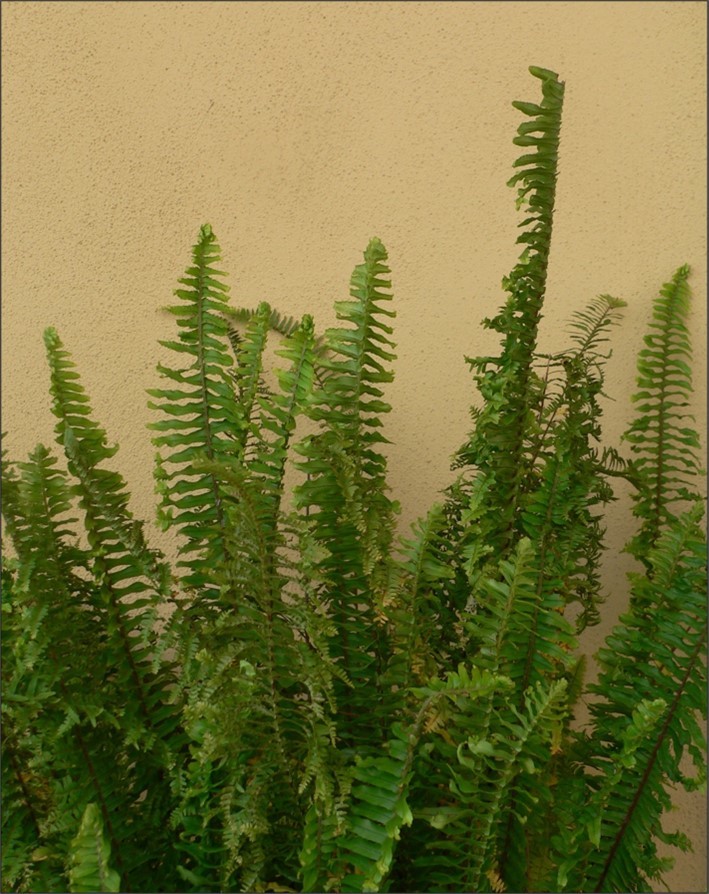
Download figure
Figure 2. Different levels of expression of the phenotype along the fronds, with ‘wavy shaped’ pinnae tips near the apical part of the mother frond and secondary fronds emission at a greater distant from the crosier.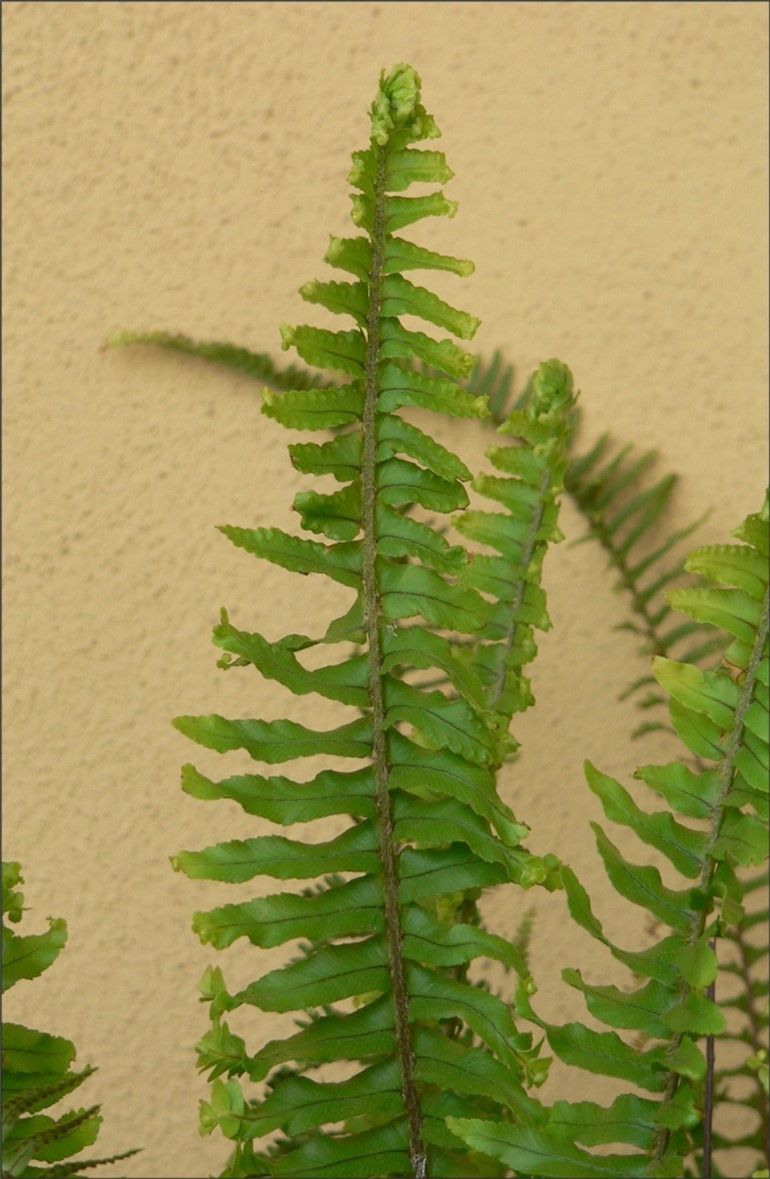
Download figure
Figure 3. Particular of the frond shown in Fig. 2 showing apparently normal pinnae in the lower part, early stage of secondary frond emission in the middle and pinnae with wavy tips above.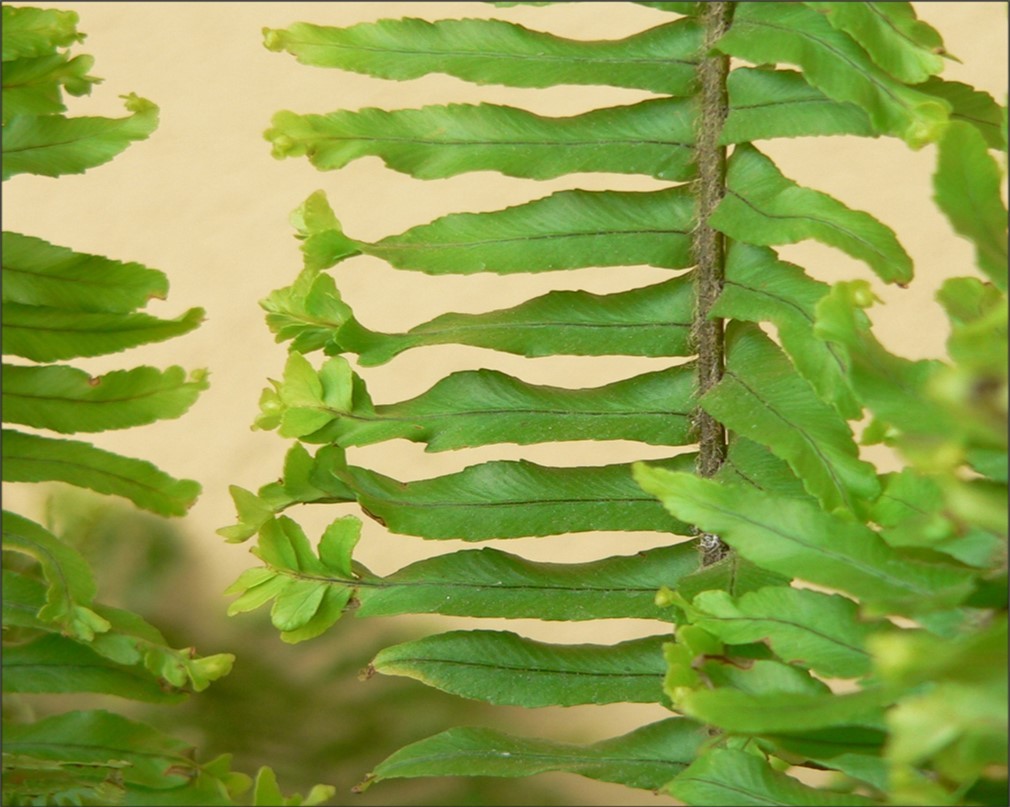
Download figure
Figure 4. Fully expanded secondary fronds in the middle part of a mother frond.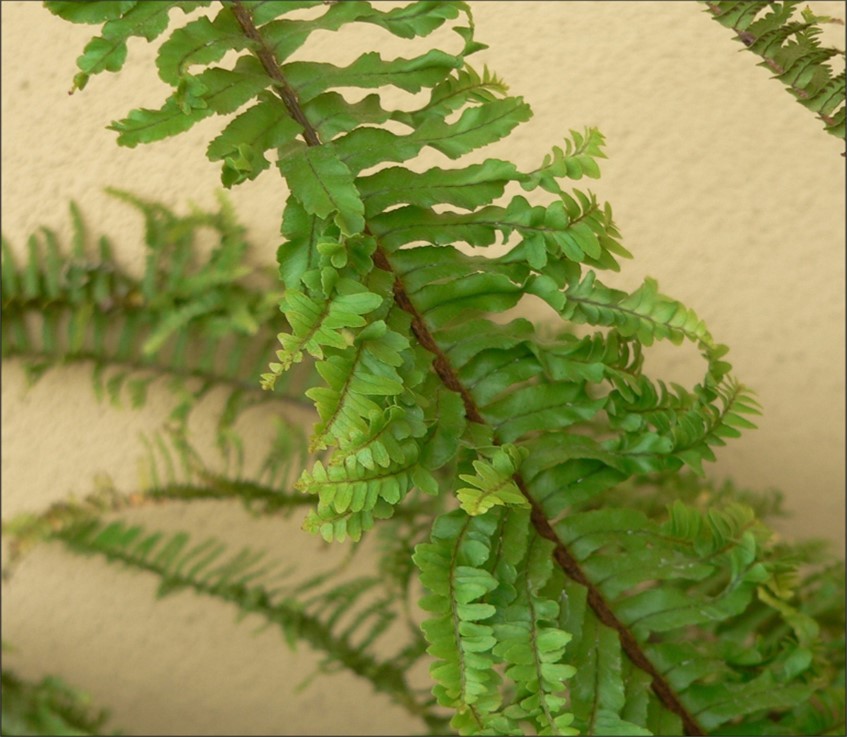
Download figure
Figure 5. Fully expanded secondary fronds in the middle part of a mother frond with sori.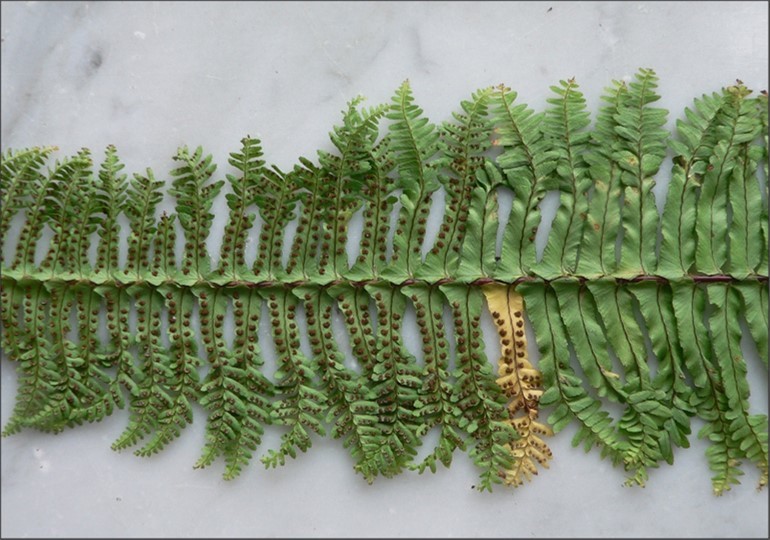
Download figure
Figure 6. Pinna bearing a fully expanded secondary frond (left) compared to a typical pinna of N. cordifolia (right).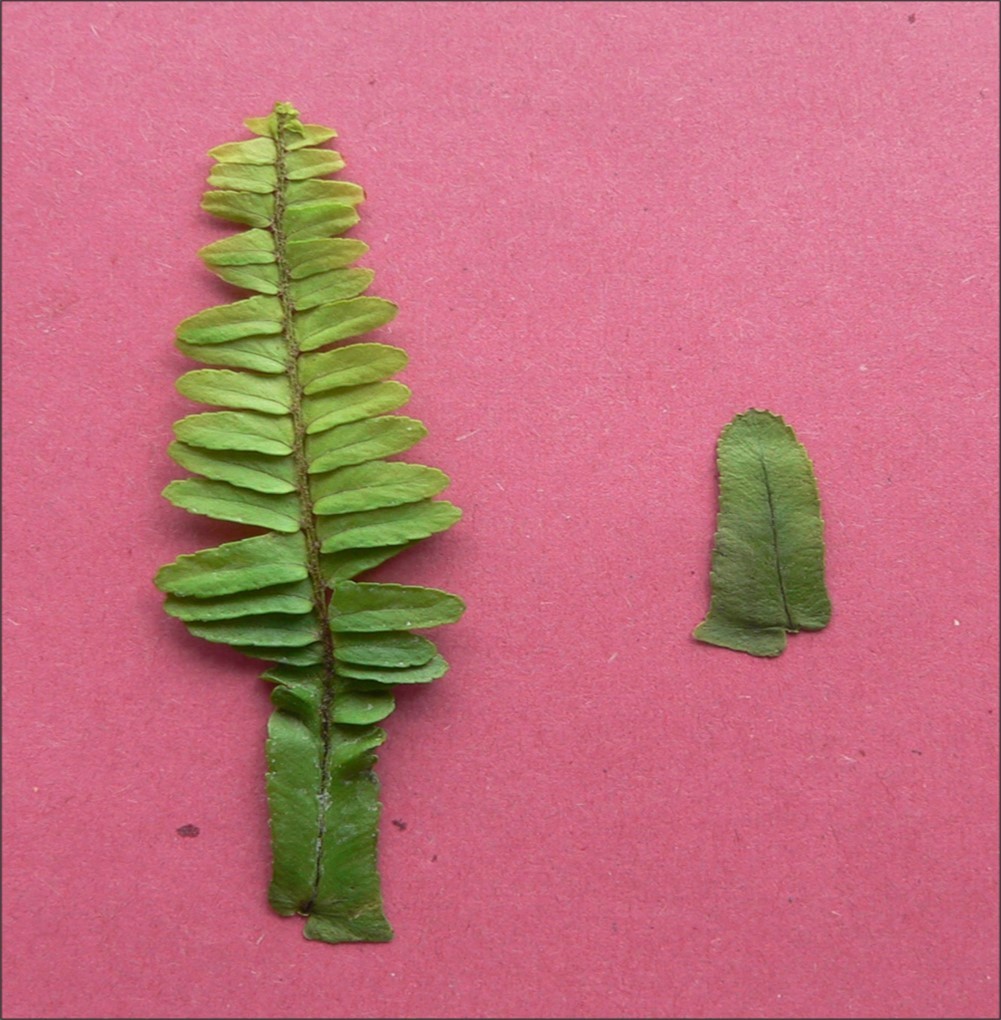
Download figure
Declarations
The author received no funding for the submitted work. The author declares no conflict of interests.
References
- 1.P H Hovenkamp, Miyamoto F. (2005) A conspectus of the native and naturalized species of Nephrolepis (Nephrolepidaceae). in the world.Blumea Doi:https://doi.org/ 10.3767/000651905X623003 50(2), 279-322.