An Integrated Systems Thinking-Artificial Intelligence Approach to Advancing Biology and Biomedicine
- Open Access
- Peer Reviewed
- Similarity Checked
- CC BY 4.0
Abstract
The complexity of living systems, ranging from cellular networks to organisms to ecosystems, poses a significant challenge to the progress of contemporary biology and biomedicine. Living organisms are complex adaptive systems that are characterized by nonlinear interactions, causal-dynamic feedback loops, and context-dependent behaviors that give rise to emergent properties that are not completely explainable or predictable from the properties of the individual components alone. Investigating and understanding systemic complexity is therefore essential for advancing biology and biomedicine. Recently, artificial intelligence (AI) has been developed for analyzing large-scale, high-dimensional datasets generated by experimental and clinical research. AI enables the identification of correlations, causal patterns, and predictive relationships, which are difficult to discern using traditional analytical approaches. However, without an overarching framework, it risks being applied in fragmented or purely data-driven ways. Systems thinking (ST) provides a framework by emphasizing holism, interconnections, and dynamic behaviors across multiple organizational scales. By integrating ST and AI, researchers can creatively and effectively investigate living systems, ensuring that computational insights are meaningful and contextually grounded. An integrated ST–AI approach is proposed as a guiding framework for twenty-first century biology and biomedicine.
Article Information
- Received
- Accepted
- Published
Academic Editor: Anubha Bajaj, Consultant Histopathologist, A.B. Diagnostics, Delhi, India.
Checked for plagiarism: Yes
Review by: Single-blind
Copyright © 2026 James A. Marcum.
 This is an open-access article distributed under the terms of the Creative Commons Attribution License, which permits unrestricted use, distribution, and reproduction in any medium, provided the original author and source are credited.
Corresponding author: James A. Marcum, Baylor University, Waco, TX 76798 USA —
Competing Interests
The authors have no competing or financial interests to disclose.
Funding
No specific funding statement was provided by the authors.
Data Availability
No data-availability statement was provided by the authors.
Citation:
Introduction
Traditionally, biology and biomedicine have relied on a reductionist approach to thinking about and investigating living organisms by focusing on the isolation and characterization of individual components—such as genes, proteins, or signaling pathways—within experimental contexts 1. This approach has been highly successful in generating foundational knowledge, including the identification of molecular mechanisms underlying many biological and biomedical phenomena. However, reductionism is increasingly acknowledged as insufficient for fully explaining the complexity of these phenomena 2, 3. Living systems are composed of dynamic, interconnected networks whose collective behavior gives rise to emergent properties that cannot be completely predicted or explained by studying components in isolation 4—although the reduction-emergence debate is quite palpable in the literature 5. However, emergent properties, such as adaptability, robustness, and nonlinear responses to perturbations, are central to living organisms as complex adaptive systems 6, 7.
The rapid expansion of high-throughput omics technologies—including genomics, transcriptomics, proteomics, and metabolomics—has further exposed the limitations of the reductionist approach 8. These technologies generate vast, multidimensional datasets that depict interactions across multiple scales, necessitating analytical frameworks capable of integrating complexity rather than simplifying it. Systems thinking (ST) addresses this need by emphasizing holistic analysis, network interactions, and dynamic modeling 9, 10. And it provides an approach for investigating how diverse biological components collectively produce complex functions and behaviors, thereby offering a better and more predictive understanding of living systems 11. And it represents a critical methodological tool in contemporary biology and biomedicine.
Understanding both complex biological systems and their emergent properties that arise from dynamic, multilevel interactions is essential for crafting effective clinical and public health interventions to advance fundamental biological and biomedical knowledge 12. Emergent properties, such as adaptability, robustness, and nonlinear responses to perturbations, cannot be fully explained through linear or reductionist analysis alone, which underscores the need for a holistic framework 13, 14. ST provides such a framework by emphasizing interdependence, dynamic feedback loops, and context across scales; and it has been widely applied to complexity-related problems in the biological and biomedical sciences, particularly within systems biology 15, 16.
The rapid growth of high-throughput technologies and of real-world experimental and clinical data has resulted in datasets of unprecedented size and complexity 17, 18. Effectively incorporating these vast and heterogeneous datasets exceeds the capacity of traditional analytical methods and thereby requires support from artificial intelligence (AI). AI technologies, such as deep learning (DL) and machine learning (ML), are well suited for extracting patterns, learning representations, and generating predictive models from large-scale biological datasets 19, 20. Yet, when applied in isolation, these technologies risk producing opaque or biologically ungrounded results 21. Integrating ST and AI can unlock AI’s full potential by embedding data-driven insights within mechanistic and systems-level understanding. To that end, an integrated ST–AI approach is proposed to drive innovation and to accelerate discovery in the biological and biomedical sciences through more accurate modeling of complex living systems.
Systems Thinking
According to Ross Arnold and Jon Wade, ST involves “a set of synergistic analytic skills used to improve the capability of identifying and understanding systems, predicting their behaviors, and devising modifications to them in order to produce desired effects” 22, 67, 5. In other words, ST is a structured analytic approach for understanding complex adaptive systems by focusing on relationships and interactions of components and on their patterns of change rather than on isolated, individual, non-interacting components. According to Donella Meadows 23, the structure of ST is not rigid but represents an iterative way of observing, learning, and intervening in complex phenomena. And Meadows identifies a set of core steps or practices that together constitute ST.
As illustrated in the Figure 1, ST begins with the initial step of framing the problem in which the system of interest is clearly articulated; and relevant temporal, spatial, and organizational limits and constraints are established, i.e., by defining the problem and setting its boundaries. This step is essential for the second step, which consists of identifying key variables and relationships in the system and distinguishing them from external influences. These two steps involve mapping the various components of the problem within a well-defined boundary 24. The third step entails collecting datasets and developing strategies to curate or manage them, while the fourth step consists of computing the datasets to generate a model and then testing it based on predictions derived from computations. The final step is evaluating the model’s performance and adapting the outcome to revise the model for further investigations of the complex system. ST is inherently cyclical, as depicted in the Figure 1; insights gained from modeling and intervention inform system refinement and continuous reassessment, which often involves reframing the problem. Through this iterative process, ST supports more astute decision-making and sustainable solutions in complex domains such as healthcare, ecology, and public policy.
Figure 1. Steps for Systems Thinking in Biological and Biomedical Research (see text for discussion).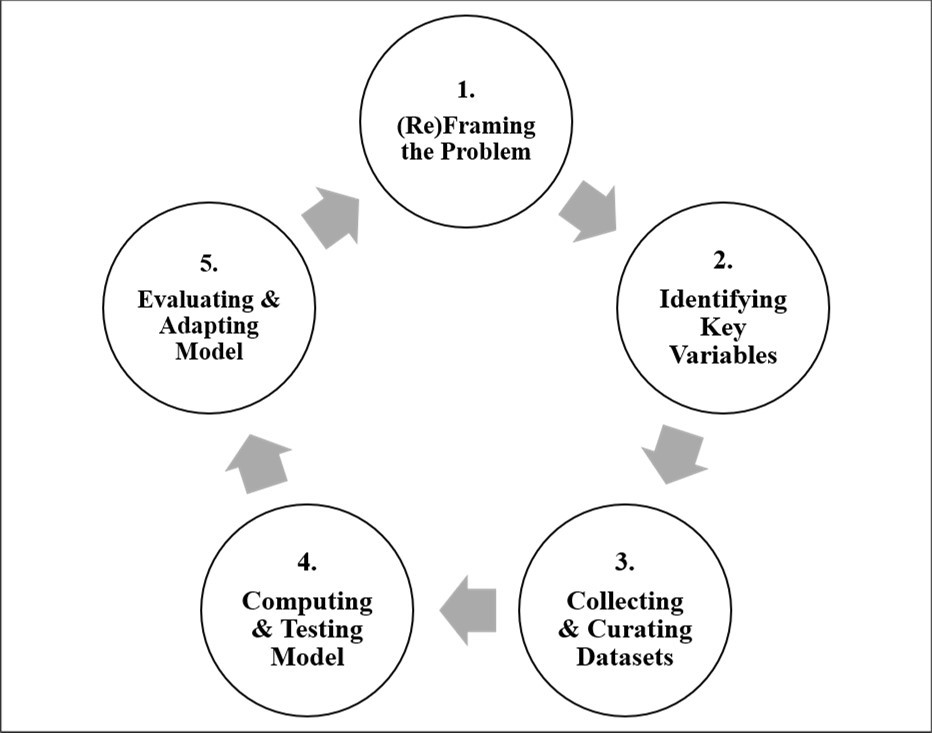
Download figure
Blood glucose homeostasis provides an apt example of ST 25, 26. The first step involves framing the problem: understanding how the body maintains blood glucose within a narrow range and why this regulation fails in conditions such as type 2 diabetes 27. System boundaries are defined temporally (e.g., minutes to hours after a meal), spatially (circulating blood and key organs), and organizationally (molecular mechanisms to cellular processes). The system’s components of interest typically include the pancreas, liver, skeletal muscle, adipose tissue, and nervous system, as well as endocrine signaling pathways that connect them 28. The next step is to identify key variables and relationships, which include blood glucose concentrations, insulin and glucagon levels, insulin receptor sensitivity, hepatic glucose production, and glucose uptake by peripheral tissues. External influences, such as diet, physical activity, stress hormones, and circadian rhythms, are also incorporated, while less relevant factors may be excluded to keep the system tractable. The data collection and management step integrates heterogeneous datasets, such as clinical glucose and insulin measurements, gene expression profiles of insulin signaling pathways, metabolomics data, and physiological parameters from population studies. These data must be curated to address noise, missing values, and differences in scale from molecular to cellular. In the modeling step, computational models—often differential equation–based or agent-based—are developed to simulate glucose–insulin dynamics 29, 30. The model is used to generate predictions, such as how altering insulin sensitivity or meal composition affects postprandial glucose levels. These predictions are then used to test the model against experimental or clinical data. In the final step, model evaluation and adaptation assess how well the simulations match observed outcomes. Discrepancies lead to model refinement, such as adding feedback loops or revising parameter estimates. This iterative process deepens the understanding of glucose regulation as an emergent property of the interacting biological subsystems and informs both basic research and clinical interventions.
Importantly, ST provides an approach for understanding complex phenomena by moving beyond the traditional reductionist approach. Rather than focusing on isolated, individual components, it promotes examination of the dynamic interactions of these components and the emergent properties that result from them 31, 32. ST is essential for disciplines such as systems biology, which seeks to understand living organisms as integrated, dynamic wholes rather than as collections of isolated parts 33, 34. In systems biology, diverse high-throughput datasets—including genomics, transcriptomics, proteomics, and metabolomics—are combined using computational and mathematical modeling to simulate complex biological processes and predict system-level behavior. By emphasizing interactions, dynamic feedback loops, and nonlinear dynamics, ST enables researchers to identify emergent properties, such as adaptability and robustness, which are not evident from single-level analysis. This holistic perspective supports more accurate modeling of biological mechanisms, improves biomarker discovery, and informs development by revealing how perturbations propagate across biological networks.
In biomedicine, ST is crucial for the development of personalized and precision therapies, as it provides a framework for integrating individual-level variability in genetics, epigenetics, environmental exposures, and lifestyle factors that collectively shape disease mechanisms 35, 36. Rather than targeting single molecular pathways, ST emphasizes network-level interactions and dynamic responses to interventions, enabling more accurate stratification of patients and prediction of treatment outcomes 37. In precision medicine, this approach supports the identification of context-dependent biomarkers and therapeutic targets by accounting for how genetic variation interacts with physiological and environmental factors 38. Such systems-oriented strategies enhance clinical decision-making and improve the effectiveness and safety of tailored interventions. For example, a systems perspective reveals that diseases, like cancers, are not caused by a single genetic defect but are the result of complex interactions within gene regulatory networks and the microenvironment 39. The COVID-19 pandemic also highlighted the need for ST in public health, illustrating how factors beyond clinical care, such as transport and social systems, influence health outcomes 40. By understanding these complex, multi-level interactions, ST provides a sturdy approach for generating solutions and for advancing scientific knowledge.
Artificial Intelligence
AI, particularly ML and DL, is revolutionizing the biological and biomedical sciences by leveraging its nonpareil ability to identify patterns within massive datasets 41, 42. Traditional analytical methods, which generally rely on reducing or simplifying complexity, often fail to uncover subtle yet significant interactions concealed within large experimental datasets. AI excels at this task, offering diverse applications across numerous biological and biomedical disciplines. For example, it is indispensable for curating and analyzing datasets from high-throughput omics technologies 43. Also DL is used to analyze vast amounts of genomic data to identify genetic variations and elucidate complex gene expression patterns 44. Moreover, DL-based proteomics can accurately classify single-cell samples, providing insights into cellular states 45, 46.
Importantly, AI can help researchers investigate the architecture and behavior of biomolecular networks, leading to systems-level understanding of molecular mechanisms and processes within these networks 47, 48. Beyond molecular biology, AI plays an increasingly fecund role in ecology and biodiversity conservation. Remote sensing, computer vision, and ML-based habitat modeling enable real-time identification of species and prediction of species distributions 49. Also, biologists use AI to monitor climate impacts and ecosystem health, as well as to optimize wildlife conservation strategies by analyzing large datasets 50. AI has improved estimations of species diversity compared to traditional methods and can be used to model the impact of human activities on ecosystems to guide conservation planning 51.
AI is also transforming the healthcare landscape. Convolutional neural networks are effective at image segmentation, classification, and detecting abnormalities in various medical images 52. For example, DL can be used to identify early-stage cancers in mammograms with performance comparable to expert clinicians 53. AI is also improving diagnosis and prognosis and is used in chronic disease research for surveillance, diagnosis, and prognosis. In cardiology, for example, ML was used to predict mortality rates in patients with suspected coronary artery disease 54. The use of AI to analyze medical datasets can support clinicians in making more accurate and timely diagnoses 55. Moreover, AI is accelerating drug discovery and development 56. ML can be used to screen large datasets to find biomolecules likely to bind to specific targets and predict their properties, which reduces the time and cost of experimental screening 57. AI is also used for de novo drug design and can be used to analyze patient data to identify biomarkers and predict treatment responses for personalized therapies 58.
An Integrated ST-AI Approach
Integration of ST and AI is proposed to provide an effective approach for investigating living organisms as complex adaptive systems. Many biological and biomedical phenomena exhibit emergent properties, arising from nonlinear interactions and dynamic feedback loops, which severely challenge traditional reductionist, linear thinking 59, 60. Since ST emphasizes the interconnectedness of components and the importance of context, it is ideal for integrating with AI to identify and explicate complex patterns within large-scale, multidimensional datasets 61. Importantly, the synergy between ST and AI can advance biology and biomedicine from a descriptive to a predictive science.
The integrated ST-AI approach can guide framing and conceptualizing problems by clearly defining their components, boundaries, and levels of organization. ST emphasizes understanding how parts relate to a whole, which is critical when dealing with complex adaptive systems characterized by interdependencies and emergent behavior, rather than isolating elements in abstraction. When combined with AI’s capacity to process high-dimensional datasets and to recognize nonlinear patterns, ST helps clarify which components and interactions are essential to model and why, improving both problem framing and model testing and validity. For example, modeling the gut microbiome requires identifying microbial taxa, host epithelial cells, immune factors, and dietary influences as interacting components within a dynamic system, which AI can facilitate by identifying and modeling 62, 63. Moreover, defining boundaries helps to avoid model drift, where inclusion or exclusion of critical variables influences system modeling 64.
As for the second step, identifying key variables and relationships, an integrated ST-AI approach can direct attention toward causality and interdependence—how one variable influences another across scales. By identifying key variables and relationships, it can help to focus analysis on causality and interdependence by showing not just which components exist but how changes in one component influence others. ST emphasizes that components are interconnected, and outcomes arise from causal feedback loops rather than isolated factors, making it essential to map both direct and indirect relationships to understand system behavior holistically. And AI complements this by enabling computational discovery of complex, multivariate dependencies from large datasets, supporting causal inference and pattern recognition beyond simple correlations. Advanced methods, such as causal discovery algorithms, aim to distinguish cause-and-effect linkages rather than mere associations, which is crucial in high-dimensional systems where interdependent variables interact nonlinearly 65. For example, in cellular signaling networks, protein-protein interactions can be modeled as motifs such as feed-forward loops and feedback circuits that govern system behavior 66. Mapping these relationships through this integrated approach creates a structural framework for subsequent data-driven modeling, ensuring that the analyses are biologically causal rather than simply correlative.
Importantly, the integrated ST-AI approach can facilitate identifying feedback loops and emergent properties, which are crucial components of complex adaptive systems. Feedback loops—whether positive/negative or reinforcing/balancing—can generate nonlinear dynamics observed in gene regulation, metabolic control, and population ecology. For example, recurrent neural networks or dynamic Bayesian networks can be used to model such feedback loops 67. This integrated approach can also be helpful in recognizing emergent properties—novel system behaviors arising from complex interactions. ST can guide the use of graph-based models to investigate emergent properties within biological and biomedical phenomena 68. Moreover, an integrated ST-AI approach assures the broader, systematic context is considered, thereby safeguarding that the biological system is not analyzed in isolation. For environmental conditions and evolutionary pressures, contextual or social determinants often influence biological behavior 69. ST can assist researchers in using AI to analyze contextual datasets, such as environmental exposures, microbiota composition, or behavioral factors, and to model the ecology of health and disease.
Once a problem is conceptually framed and key variables and relationships identified, ST can then guide the third step of dataset acquisition using AI to curate and manage these datasets through multimodal integration 70. Biological systems operate across multiple organizational scales—from genes and proteins to populations and ecosystems—and across diverse dataset modalities 71. An integrated ST-AI approach allows researchers to model the multifaceted nature of biological regulation and adaptation. For example, integrating transcriptomic and proteomic datasets has revealed regulatory hubs not detectable from analyzing any single dataset 72.
An integrated ST-AI approach can also guide feature engineering by emphasizing mechanistic relevance 73. Instead of relying solely on automated feature extraction, researchers can incorporate domain knowledge about network topology, metabolic fluxes, or pathway dependencies 74. This integrated approach can help to combine data-driven discovery with mechanistic insight and thereby enhance both model interpretability and generalizability. For example, network-based features derived from protein interaction graphs can assist in using ML to identify biologically coherent gene clusters associated with disease 75.
Real-world biological datasets are frequently noisy, heterogeneous, and incomplete, posing challenges for robust system modeling and inference 76. The proposed integrated ST-AI approach addresses these challenges by situating data limitations within the broader system context and by applying AI methods such as data integration, uncertainty quantification, and missing-data imputation 77. Together, these strategies improve model reliability and interpretability in complex biological systems. For example, imputation methods guided by network topology or causal inference can better preserve system coherence than purely statistical techniques 78. Ensuring data quality through this integrated approach allows researchers to use AI to recognize patterns that remain faithful to biological facts rather than artifacts from preprocessing.
For the fourth step, ST can be used to direct AI in computing models for complex adaptive systems based on large datasets. Specifically, ST can efficiently guide model selection and training through configuring the experimental problem. Two examples include graph neural networks, which are well-suited for modeling biological interaction networks 79, and recurrent neural networks, which can model temporal gene expression dynamics 80. Ensemble methods, such as random forests or gradient boosting, can also be used to model nonlinear relationships while providing measures of variable importance 81.
And the integrated ST-AI approach can facilitate testing models by evaluating predictions generated through computational analyses and simulations. At this stage, hypotheses derived from the models are compared against empirical observations, experimental data, or independent validation datasets. In biological and biomedical contexts, this may involve testing predicted gene–gene interactions, pathway perturbations, or clinical outcomes under simulated interventions. Sensitivity analysis and uncertainty quantification are often applied to assess the robustness of model predictions and to identify parameters or interactions that exert disproportionate influence on system behavior 82, 83. Importantly, model testing is not limited to accuracy alone but also includes biological plausibility, internal consistency, and the model’s ability to reproduce known system dynamics across multiple conditions 84. Through this process, discrepancies between predictions and observed outcomes become valuable sources of insight, revealing gaps in system understanding or data representation.
The final step involves evaluating overall model performance and adapting the model to guide subsequent investigations of the complex adaptive system. Evaluation typically integrates quantitative metrics, such as predictive accuracy, stability, and generalizability, with qualitative assessments informed by domain expertise 85. For systems biology, this step emphasizes iterative refinement, where model structure, parameters, or assumptions are revised in response to validation results 86. Adaptive model revision reflects the inherently dynamic and evolving nature of living systems, acknowledging that no single model can fully depict biological complexity. Instead, models serve as learning tools that evolve alongside new data and theoretical advances. This adaptive cycle supports continuous improvement in explanatory power and predictive utility, ultimately enabling more reliable system-level insights and informing future experimental design and intervention strategies. Finally, models should not only achieve statistical accuracy but also reproduce emergent system behaviors, such as homeostasis or robustness, when simulated under perturbations 87.
Moreover, AI depends on explainability, interpretability, and transparency 88. For example, explainable AI—including attention mechanisms, feature attribution methods, and symbolic regression—allows researchers to trace the logic of model predictions back to biological hypotheses 89. The proposed integrated approach helps to uncover causal mechanisms rather than simply to predict correlations. For example, application of neural networks and DL to gene expression datasets resulted in the detection of structures involved in regulatory genomics and cellular imaging 90, 91. An integrated ST-AI approach ensures that computational outputs result in coherent and meaningful insights into biological and biomedical systems.
The explanatory power and clinical relevance of the proposed integrated ST-AI approach can be illustrated by returning to the blood glucose homeostasis example. In the first step, the integrated approach can assist in problem framing by analyzing large clinical and population datasets to identify relevant temporal scales (e.g., minutes vs. days), subpopulations (e.g., insulin-resistant phenotypes), and contextual factors (e.g., diet, sleep, or medication use). ML can reveal latent structures that help refine system boundaries, ensuring that the model includes biologically and clinically meaningful components without becoming intractably complex 92. For the second step, in terms of identifying key variables and relationships, feature selection algorithms and causal discovery methods, e.g., Bayesian networks, Granger causality–inspired approaches, can be used to identify influential variables and causal feedback loops among glucose, insulin, glucagon, cortisol, physical activity, and tissue-specific insulin sensitivity 93, 94. Moreover, ML can uncover nonlinear relationships and cross-scale interactions that are difficult to detect using traditional statistical approaches alone 95. With respect to the third step, collecting, curating, and integrating data, AI is especially powerful in handling heterogeneous data sources central to systems biology, while ML-based data harmonization techniques can integrate continuous glucose monitoring data, metabolomics, electronic health records, and lifestyle data. Automated anomaly detection and imputation methods improve data quality, while representation learning enables alignment of molecular, physiological, and behavioral data into a shared analytical space 96.
For the fourth step, hybrid modeling approaches combine mechanistic models, e.g., differential equations describing insulin–glucose dynamics, with ML components that identify unknown or poorly characterized functions, such as tissue-specific insulin responsiveness. Neural networks, Gaussian processes, or reinforcement learning agents can augment classical physiological models and thereby improve predictive accuracy while preserving biological interpretability 97. And for testing predictions and simulating interventions, AI-enabled models can simulate “what-if” scenarios at scale, such as varying meal composition, exercise timing, or pharmacologic interventions 98. Reinforcement learning can be used to explore optimal control strategies for maintaining euglycemia, providing insights relevant to personalized insulin dosing or lifestyle recommendations. These predictions can be tested against real-world or prospective clinical data. For the final step, evaluating, learning, and adapting the model, continuous learning frameworks allow models to be updated as new data become available, such as longitudinal glucose monitoring streams. And explainable AI techniques help to assess whether model behavior aligns with known physiology or pathology, supporting trust and scientific validity 99. Model performance metrics then inform refinement of assumptions, variable selection, or system boundaries, not only closing the ST-AI loop but also opening another for further investigations.
In summary, for the integrated ST–AI approach, AI operationalizes ST by enabling the integration, modeling, and iterative refinement of complex, multiscale datasets, while ST provides the conceptual architecture that guides the use of AI throughout each step of the approach. The approach’s overall value is ensuring that biological and biomedical phenomena are understood as dynamic, interconnected, multilevel systems. To that end, the value of step 1, (Re)Framing the Problem, consists of ST establishing an appropriate system boundary, context, purpose, and level of analysis before AI modeling begins, whereas the value of the next step, Identifying Key Variables, involves ST providing the structural and relational architecture needed to determine which variables and interactions AI should analyze. The value of the third step, Collecting and Curating Datasets, entails ST ensuring that AI receives contextually meaningful, multiscale, and appropriately integrated data rather than disconnected datasets, while the value of the following step, Computing and Testing the Model, comprises ST transforming AI from a primarily pattern-recognition tool into a system-level modeling and hypothesis-generation instrument. The value of the final step, Evaluating and Adapting Model, focuses on making the integrated ST–AI approach iterative, adaptive, and self-correcting, allowing the model and the investigator’s understanding of the system to evolve together. In the context of glucose homeostasis, the integrated ST-AI approach can transform the circular systems model into a learning system that evolves with data, deepens biological understanding, and supports precision approaches to metabolic health.
Conclusion
The proposed integrated ST-AI approach differs from related approaches primarily in its explicit integration of systems-level reasoning with computational intelligence. Systems biology, for example, focuses on modeling interactions among biological components, whereas systems medicine extends this perspective toward disease mechanisms and clinical decision-making. Causal AI emphasizes identifying causal relationships rather than statistical associations, providing an important component for interpreting mechanisms and interventions. Hybrid ML combines different computational approaches, such as mechanistic models and data-driven algorithms, to improve prediction and generalizability. In contrast, the ST–AI framework provides an overarching methodological architecture that can incorporate these approaches while beginning with system definition, boundary setting, identification of relationships and feedback, and multiscale data integration. AI then supports computational modeling, prediction, validation, and iterative adaptation. Thus, the integrated ST–AI approach is less a competing methodology than an integrative framework capable of incorporating systems biology, systems medicine, causal inference, and hybrid ML to address the emergent, dynamic, and context-dependent behavior of complex living systems.
Moreover, what distinguishes the integrated ST-AI approach is its explicit integration of systems-level reasoning with the computational capabilities of AI, rather than treating these as independent methodologies. The approach begins by defining the biological or biomedical system, establishing its boundaries, identifying interacting components, feedback relationships, and emergent properties, and then uses AI to integrate and analyze heterogeneous, multiscale datasets. Importantly, computational modeling is embedded within an iterative systems-thinking cycle in which predictions are tested against empirical observations, model performance is evaluated, and findings are used to revise both the model and subsequent investigations. This distinguishes the integrated ST–AI approach from approaches primarily focused on molecular description, clinical prediction, causal inference, or algorithmic optimization. Its principal contribution is therefore methodological integration: combining holistic systems reasoning, data-driven computation, mechanistic interpretation, iterative validation, and adaptive learning into a unified framework for investigating complex living systems.
Finally, the integrated ST-AI approach provides a robust framework for advancing biological and biomedical research in the twenty-first century. Ultimately, this approach can help to facilitate biological and biomedical inquiry by encouraging researchers to envision models not as enigmatic devices but as experimental tools embedded within dynamic systems of understanding. By embracing a holistic approach and leveraging the strengths of both ST and AI, researchers can begin to unravel the complexities of living systems, accelerate discoveries, and ultimately to improve human and planetary health and well-being. Addressing the challenges and focusing on further development in these areas are crucial for realizing the full potential of this transformative partnership.
References
- 1.Brigandt I. (2023) Reductionism in biology. In The Stanford Encyclopedia of. Philosophy; Zalta, E.N.; Nodelman, U., Eds.;
- 2.H. (2012) Bio-complexity: Challenging reductionism. In Handbook of Systems and Complexity in Health;. , Sturmberg, J.; Martin, C: Eds.; Springer: 193-208.
- 3.M I Kaiser. (2011) The limits of reductionism in the life sciences. Hist. Philos. Life Sci.33 453-476.
- 4.I R Cohen, Harel D. (2007) Explaining a complex living system: Dynamics, multi-scaling and emergence. J. R. Soc. Interface,4 175-182.
- 6.Rosslenbroich B. (2016) Properties of life: Toward a coherent understanding of the organism. Acta. Biotheor.64 277-307.
- 7.Whitacre J. (2012) Biological robustness: Paradigms, mechanisms, and systems principles. Front. Genet.3 67, 10-3389.
- 8.Huang S. (2018) The tension between big data and theory in the ‘omics’ era of biomedical research. Perspect. Biol. Med.61 472-488.
- 9.M C Jackson. (2024) Critical Systems Thinking: A Practitioner’s Guide. , New York, USA: John Wiley & Sons:
- 11.Noble D. (2012) A theory of biological relativity: No privileged level of causation. Interface Focus.2.
- 12.Iqbal M. (2024) Systems biology approaches to deciphering complex biological networks: Implications for health and disease. Multidiscip. J. Biochem. Tech.1 74-83.
- 13.J F Ponge. (2005) Emergent properties from organisms to ecosystems: Towards a realistic approach. Biol. Rev.80 403-411.
- 14.G M Souza, Amaral do, N M. (2019) Emergent properties and stability in hierarchical biosystems: There is no privileged level of causation. In Emergence and Modularity in Life Sciences; Wegner, L.H.; Lüttge, U, Eds.; , Cham, CH: Springer: 217-234.
- 16.Loscalzo J, A L Barabasi. (2011) Systems biology and the future of medicine. Wiley Interdiscip. Rev. Syst. Biol. Med.3 619-627.
- 17.A R Baião, Cai Z, R C Poulos, P J Robinson, R et al. (2025) A technical review of multi-omics data integration methods: From classical statistical to deep generative approaches. Brief. Bioinform.26 355, 10-1093.
- 18.Vitorino R. (2024) Transforming clinical research: The power of high-throughput omics integration. Proteomes,12 25-10.
- 20.M W Libbrecht, W S Noble. (2015) . Machine learning applications in genetics and genomics. Nat. Rev. Genet.16 321-332.
- 21.J T O’Brien, Nelson C. (2020) Assessing the risks posed by the convergence of artificial intelligence and biotechnology. Health Secur.18. 219-227.
- 22.R D Arnold, J P Wade. (2015) A definition of systems thinking: A systems approach. Procedia. Comput. Sci.44 669-678.
- 24.Lane A, Reynolds M. (2017) Systems thinking in practice: Mapping complexity. In Mapping Environmental Sustainability, Oreszczyn, S.;Lane, A.; Eds.; Policy Press:. , Bristol, UK 17-44.
- 26.A R Kahkoska, Smith C, L A Young, Lich Hassmiller, K. (2024) Use of systems thinking and adapted group model building methods to understand patterns of technology use among older adults with type 1 diabetes: A preliminary process evaluation. BMC. Med. Res 24, 126-10.
- 27.Cobelli C, Man Dalla, Sparacino C, Magni G, L De Nicolao et al. Diabetes: Models, signals, and control. IEEE Rev. Biomed. Eng 2009, 54-96.
- 28.Lema-Pérez L. (2021) Main organs involved in glucose. In Sugar Intake: Risks and Benefits and the Global Diabetes Epidemic, Martins, I.J. Ed. IntechOpen; , London, UK 121-132.
- 29.Cinar A. Turksoy, K.Advances in Artificial Pancreas Systems: Adaptive and Multivariable Predictive Control. , Cham, CH: Springer: 2018-10.
- 30.Gaalen R D van, Karttunen M. (2008) Agent-based modelling of glucose transport. Journal of Comput. Interdiscip. Sci.1 41-49.
- 31.J Y Kresh. (2006) Integrative systems view of life: Perspectives from general systems thinking. In Complex Systems Science in Biomedicine; Deisboeck, T.S.; Kresh, J.Y., Eds , Boston, MA, USA: Springer: 3-29.
- 32.Rusoja E, Haynie D, Sievers J, Mustafee N, Nelson F et al. (2018) Thinking about complexity in health: A systematic review of the key systems thinking and complexity ideas in health. J. Eval. Clin. Pract.24 600-606.
- 33.P. (2022) Systems thinking in ecological and physiological systems and the role of representations. In Fostering Understanding of Complex Systems. in Biology Education: Pedagogies, Guidelines and Insights from Classroom-Based Research; Ben Zvi Assaraf, O.; Knippels, M.-C.P.J., Eds , Cham, CH: Springer: 105-121.
- 34.D W Orr, Niccolucci V, Bastianoni S. (2008) Ecological systems thinking. In Ecosystem Ecology;. , New York, USA: Jørgensen, S.E., Ed. Elsevier: 12-16.
- 35.D, Adam T. (2009) Systems Thinking for Health Systems Strengthening. World Health Organization:. , Geneva: CH
- 36.D H Peters. (2014) The application of systems thinking in health: Why use systems thinking? Health Res. Policy. Syst.12 51-10.
- 37.R E Smith. (2018) Systems Thinking in Medicine and New Drug Discovery, Volume 1; Cambridge Scholars Publishing:. , Newcastle, UK
- 38.F S Collins, Varmus H. (2015) A new initiative on precision medicine. N. Engl. J. Med.372 793-795.
- 39.A M Soto, Sonnenschein C. (2018) Reductionism, organicism, and causality in the biomedical sciences: A critique. Perspect. Biol. Med.61 489-502.
- 40.Tretter F, E M Peters, Sturmberg J, Bennett J, Voit E et al. (2023) Perspectives of (/memorandum for) systems thinking on COVID‐19 pandemic and pathology. J. Eval. Clin. Pract.29 415-429.
- 41.P V Mohanan, Ed. (2025) Artificial Intelligence and Biological Sciences. , Raton, FL, USA: CRC Press: Boca
- 42.Naskar S, Sharma S, Kuotsu K, Halder S, Pal G et al. (2025) The biomedical applications of artificial intelligence: An overview of decades of research. J. Drug Target.33 717-748.
- 43.Yetgin A. (2025) Revolutionizing multi‐omics analysis with artificial intelligence and data processing. Quant. Biol.13 70002, 10-1002.
- 44.Zou J, Huss M, Abid A, Mohammadi P, Torkamani A et al. (2019) A primer on deep learning in genomics. Nat. Genet.51 12-18.
- 45.K, Kühn A, Höhn J, T J Brinker, Krijgsveld J. (2024) Deep learning-based proteomics enables accurate classification of bulk and single-cell samples. 2024-02.
- 46.Mund A, Coscia F, Kriston A, Hollandi R, Kovács F et al. (2022) Deep visual proteomics defines single-cell identity and heterogeneity. Nat. Biotechnol.40 1231-1240.
- 47.D C Anih, K A Arowora, M A Abah, K C Ugwuoke, Habibu B. (2025) Redefining biomolecular frontiers: The impact of artificial intelligence in biochemistry and medicine. J. Med. Sci.25 1-10.
- 48.Xu Y, Liu X, Cao X, Huang C, Liu E et al. (2021) Artificial intelligence: A powerful paradigm for scientific research. Innovation. 2. 100179-10.
- 49.Wäldchen J, Mäder P. (2018) Machine learning for image-based species identification. Methods Ecol. Evol.9 2216, 10-1111.
- 50.Fergus P, Chalmers C, Longmore S, Wich S. (2024) Harnessing artificial intelligence for wildlife conservation. Conservation,4. 685-702.
- 51.Ullah F, Saqib S, Y C Xiong. (2025) Integrating artificial intelligence in biodiversity conservation: Bridging classical and modern approaches. Biodivers. Conserv.34 45-65.
- 52.S M Anwar, Majid M, Qayyum A, Awais M, Alnowami M et al. (2018) Medical image analysis using convolutional neural networks: A review. J. Med. Syst.42 226-10.
- 53.S M McKinney, Sieniek M, Godbole V, Godwin J, Antropova N et al. (2020) International evaluation of an AI system for breast cancer screening. Nature,577. 89-94.
- 54.Motwani M, Dey D, D S Berman, Germano G, Achenbach S et al. (2017) Machine learning for prediction of all-cause mortality in patients with suspected coronary artery disease: A 5-year multicentre prospective registry analysis. Eur. Heart J.38 500-507.
- 55.Shen J, C J Zhang, Jiang B, Chen J, Song J et al. (2019) Artificial intelligence versus clinicians in disease diagnosis: Systematic review. JMIR Med. Inform.7 10010, 10-2196.
- 56.Tripathi A, Misra K, Dhanuka R, J P Singh. (2023) Artificial intelligence in accelerating drug discovery and development. Recent Pat. Biotechnol.17 9-23.
- 57.P, Patil S, Khaparkhuntikar K, Patil S, P K Singh et al. (2023) Artificial intelligence: Machine learning approach for screening large database and drug discovery. Antiviral Res.220. 105740-10.
- 58.Boniolo F, Dorigatti E, A J Ohnmacht, Saur D, Schubert B et al. (2021) Artificial intelligence in early drug discovery enabling precision medicine. Expert. Opin. Drug Discov.16 991-1007.
- 59.Bechtel W, Abrahamsen A. (2011) Complex biological mechanisms: Cyclic, oscillatory, and autonomous. , Waltham, MA, USA, In Philosophy of Complex Systems; Hooker, C., Ed. North-Holland: 257-285.
- 60.Larter R, Worth R, Speelman B. (2000) Nonlinear dynamics in biochemical and biophysical systems: From enzyme kinetics to epilepsy. In Self-Organized Biological Dynamics and Nonlinear Control: Toward Understanding Complexity, Chaos and Emergent Function in Living Systems;. , New York, USA: Cambridge University Press: 44-65.
- 61.Qudrat-Ullah H. (2025) Navigating Complexity: AI and Systems Thinking for Smarter Decisions. , Springer: Cham 10-1007.
- 62.T C Dakal, Xu C, Kumar A. (2025) Advanced computational tools, artificial intelligence and machine-learning approaches in gut microbiota and biomarker identification. Front. Med. Technol.6
- 63.Lloyd-Price J, Arze C, A N, Schirmer M, Avila-Pacheco J et al. (2019) . Multi-omics of the gut microbial ecosystem. Nature.569 512-520.
- 64.Pelosi D, Cacciagrano D, Piangerelli M. (2025) Explainability and interpretability in concept and data drift: A systematic literature review. Algorithms.18. 443-10.
- 65.Wu J, Lu Y, Li D, Zhou W, Huang J. (2023) Key influencing factors identification in complex systems based on heuristic causal inference. Appl. Sci 13, 10575-10.
- 66.Yeger-Lotem E, Sattath S, Kashtan N, Itzkovitz S, Milo R et al. (2004) Network motifs in integrated cellular networks of transcription–regulation and protein–protein interaction. Proc. Natl. Acad. Sci. USA 101, 5934-5939.
- 67.Bitzer S, S J Kiebel. (2012) Recognizing recurrent neural networks (rRNN): Bayesian inference for recurrent neural networks. Biol. Cybern.106 201-217.
- 68.Li R, Yuan X, Radfar M, Marendy P, Ni W et al. (2021) Graph signal processing, graph neural network and graph learning on biological data: A systematic review. IEEE Rev. Biomed. Eng.16 109-135.
- 69.Snyder-Mackler N, J R Burger, Gaydosh L, D W Belsky, G A Noppert et al. (2020) Social determinants of health and survival in humans and other animals. Science,368. 9553-10.
- 70.Lahat D, Adali T, Jutten C. (2015) Multimodal data fusion: An overview of methods, challenges, and prospects. Proc. IEEE.103 1449-1477.
- 71.L V Schaffer, Ideker T. (2021) Mapping the multiscale structure of biological systems. Cell. Syst.12 622-635.
- 72.T C Kuo, T F, Y J Tseng. (2013) 3Omics: A web-based systems biology tool for analysis, integration and visualization of human transcriptomic, proteomic and metabolomic data. BMC Syst. Biol.7 64-10.
- 73.Q P He, Wang J. (2020) Application of systems engineering principles and techniques in biological big data analytics: A review. Processes,8 951-10.
- 74.Amara A, Frainay C, Jourdan F, Naake T, Neumann S et al. (2022) Networks and graphs discovery in metabolomics data analysis and interpretation. Front. Mol. Biosci.9 841373, 10-3389.
- 75.Ding Y, Lei X, Liao B, F X Wu. (2021) Machine learning approaches for predicting biomolecule–disease associations. Brief. Funct. Genomics,20 273-287.
- 76.Li Y, Chen L. (2014) Big biological data: Challenges and opportunities. Genom. Proteom. Bioinform.12 187-189.
- 77.Schumann Y, Gocke A, J E Neumann. (2025) Computational methods for data integration and imputation of missing values in omics datasets. Proteomics.25, e202400100. https://doi.org/10.1002/pmic.202400100
- 78.Howey R, A D Clark, Naamane N, L N Reynard, A G Pratt et al. (2021) A Bayesian network approach incorporating imputation of missing data enables exploratory analysis of complex causal biological relationships. PLoS Genet.17. 1009811-10.
- 79.Corso G, Stark H, Jegelka S, Jaakkola T, Barzilay R. (2024) . Graph neural networks. Nat. Rev. Methods Primers,4 17-10.
- 80.Monti M, Fiorentino J, Milanetti E, Gosti G, G. (2022) Prediction of time series gene expression and structural analysis of gene regulatory networks using recurrent neural networks. Entrop.24. 141-10.
- 82.A C Babtie, Kirk P, M P Stumpf. (2014) Topological sensitivity analysis for systems biology. Proc. Natl. Acad. Sci. USA,111 18507-18512.
- 83.Saltelli A, Ratto M, Andres T, Campolongo F, Cariboni J et al. (2008) Global Sensitivity Analysis: The Primer. , Hoboken, NJ, USA: John Wiley & Sons:
- 84.J W Haefner. (2005) Modeling Biological Systems: Principles and Applications. , Boston, MA,.https://doi.org/10.1007/b106568: Springer:
- 85.D V Carvalho, E M Pereira, J S Cardoso. (2019) . Machine learning interpretability: A survey on methods and metrics. Electronics.8 832-10.
- 86.Ideker T, Galitski T, Hood L. (2001) A new approach to decoding life: Systems biology. Annu. Rev. Genomics Hum. Genet. 2 343-372.
- 87.Kitano H. (2004) . Biological robustness. Nat. Rev. Genet.5, 826–837.https://doi.org/10.1038/nrg1471 .
- 88.Ramachandram D, Joshi H, Zhu J, Gandhi D, Hartman L et al. (2025) Transparent AI: The case for interpretability and explainability.arXiv, arXiv:. 2507-23535.
- 89.Samek W, Montavon G, Vedaldi A, L K Hansen, K R Müller et al. (2019) . Explainable AI: Interpreting, Explaining and Visualizing Deep Learning , New York: Springer: 10-1007.
- 90.Angermueller C, Pärnamaa T, Parts L, Stegle O. (2016) Deep learning for computational biology. Mol. Syst. Biol.12 878, 10-15252.
- 91.Eetemadi A, Tagkopoulos I. (2019) Genetic neural networks: An artificial neural network architecture for capturing gene expression relationships. Bioinformatics.35. 2226-2234.
- 92.Alber M, Tepole Buganza, Cannon A, W R De, Dura-Bernal S et al. (2019) Integrating machine learning and multiscale modeling—Perspectives, challenges, and opportunities in the biological, biomedical, and behavioral sciences. NPJ Digit. Med. 2 115-10.
- 93.He M, Gu W, Kong Y, Zhang L, C J Spanos et al. (2019) CausalBG: Causal recurrent neural network for the blood glucose inference with IoT platform. IEEE Internet Things 7, 598-610.
- 94.Wellmanns A, Schmiemann P. (2022) Feedback loop reasoning in physiological contexts. J. Biol. Ed.56 465-485.
- 95.Ryo M, M C Rillig. (2017) Statistically reinforced machine learning for nonlinear patterns and variable interactions. , Ecosphere.8, e01976.https://doi.org/10.1002/ecs2.1976
- 96.J L Ballard, Wang Z, Li W, Shen L, Long Q. (2024) Deep learning-based approaches for multi-omics data integration and analysis. BioData. Min.17 38-10.
- 97.Mahmud M, M S Kaiser, Hussain A, Vassanelli S. (2018) Applications of deep learning and reinforcement learning to biological data. IEEE Trans. Neural Netw. Learn. Syst.29 2063-2079.